Sunday, November 17, 2013

The Crusades and the Soldiers of the Cross: The 10 Most Important Crusaders, From German Emperors to Charismatic Hermits, Child Armies, and Warrior Lepers by Michael Rank

 The Crusades and the Soldiers of the Cross: The 10 Most Important Crusaders, From German Emperors to Charismatic Hermits, Child Armies, and Warrior Lepers by Michael Rank

Synopsis: 'The Crusades and the Soldiers of the Cross' is an exciting new book by best-selling author and historian Michael Rank about the quest to retake the Holy Land. It looks at the lives and times of the 10 most important people in one of the most interesting times in history, covering 1095 to 1212.

Whether it is Peter the Hermit raising an army of 100,000 peasants to fight in the Holy Land with nothing but pitchforks or Baldwin IV personally leading his forces against Saladin despite having terminal leprosy, these larger-than-life figures were all drawn to the Holy Land and compelled to forsake their vast land holdings while embarking on a dangerous adventure against a superior enemy.

This book will look at the reasons for these 10 figures joining the crusade. Perhaps it was for glory in battle, as was the case for Richard the Lionheart. For others it was simple curiosity, such as Eleanor of Aquitaine, who added dramatic panache to the whole affair and brought along 300 female servants donned in decorative armor and carrying lances while on the march to Jerusalem. For many it was a simple faith conviction, such as the thousands of child crusades, who legend has it marched to the Mediterranean sea and expected it to open for them as the Red Sea had done for Moses.

Whatever their background, these 10 crusaders demonstrate that a person willing to brave the enormously dangerous journey -- traveling to to a different continent over land no less -- had a personality fitting for the fascinating time in which they lived.

  
Review: The book provides facts about various crusades in a very dry way. I found some of the facts interesting but didn't ever found anything exciting or enthusiast, it read more like a textbook than a fun read.

Because of the coldness of the writing I never felt any connection to the historical figures and didn't really care how they fared.

I do have some knowledge of the medieval period, but I am by no means a historical buff, still I found myself knowing a lot about what I was reading and a lot of the information in here is probably well known.

Quite a few of the ten chapters overlapped and information in one could be read about in another. Also some of the crusades in this book were very similar to others and even if there were some differences it felt too similar and I would have preferred to have read about a more varied tales.

Because each chapter was short, the information on each crusade was limited and I felt I was missing out on a lot.

Overall this was an okay read, perhaps a nice afternoon read if you fancy an easy historical read even if it wasn't particularly exciting.

In full disclosure I won this book in a Goodreads giveaway.

Rating **


Sunday, November 10, 2013

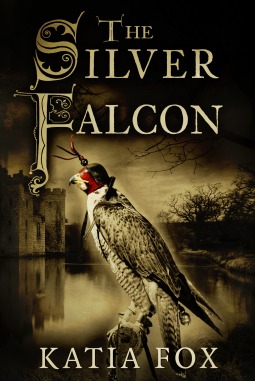
The Silver Falcon (Das kupferne Zeichen #2) by Katia Fox

 The Silver Falcon (Das kupferne Zeichen #2) by Katia Fox

Synopsis: England, 1184
Young Will, the Marshal’s bastard son, dreams of training falcons but as the son of famous swordsmith Ellenweore, it seems his destiny will be the forge.

One fateful day, the falcon of King Henry II is lost in a chase and Will happens upon the bird. Recognizing this great opportunity, he begs the king to let him become a falconer. With no clear path ahead of him, he decides to take matters into his own hands and following his dreams of one day becoming a falconer to the king.

Love, intrigue and betrayal leave Will more than once only narrowly escaping death and when his talent attracts King John’s attention, a powerful enemy does everything to ruin him.


 Review:
This book was amazing and easily one of my favorite reads of the year.

The level of detail is excellent; the author does a fantastic job of bringing the medieval world to life and fills every sense. The detail is never too long and doesn’t take too much time away from the story. There is no indication that this book has been translated from another language and is better worded and constructed than most of books.

The detailing on many aspects of the characters lives is also very well described, falconry is obviously an important part of the main character’s life and we are told a lot about this, but other things that are important to him are also given plenty of attention. A few times I did find the information lacking, such as the types of horses people are riding and the amount things cost is never given. Very rarely there was a piece of incorrect information, such as referring to the priest who opposed King Henry II as Thomas à Becket, but other than these few small things I found the level of research and detail to be very high but never described to the point it became boring.

Most of the time how the information is presented is not dull, although a few times when the author is describing important events that are happening in the world that don’t directly involve the character, typically real historic events such as the imprisonment of King Richard or the deaths or marriages of monarchs, I found these times to be less well told and it felt more like a history book than an interesting story.

The characters in the book are wonderful; they have strong but realistic personalities. You could always tell which character you were following just by the way they are thinking and acting even if no names or context was provided. They have real emotions and think things that a person would in real life but it is presented so well that it is still interesting to read. The characters have plenty of background and history. The also make mistakes, think bad thoughts, feel guilt and come to the wrong conclusions at times, all making them much more believable and interesting.

The world itself is realistic and very, very brutal, we’re talking Game of Thrones/Song of Ice and Fire brutal at times. Very unpleasant things happen to the main characters.

The amount of action in the book is low compared to other historical fiction books and as our main character is not a warrior when there is action it is generally bad for him. Having said that I never missed the lack of high paced action as the rest of the story is so interesting.

One side effect of having so many unpleasant things happen to the main character was that whenever there was the potential for something bad to happen in was a time of high tension, even if it turned out nothing went wrong, especially as the author did such a great job of making me care for William.

The story details the highs and lows of the characters life. The ebb and flow was always believable and never took impossible leaps. The various highs and lows happened in a realistic and random manner, and you could never tell if something good or bad was about to happen simply because it was time for one.

His rise in rank while it would have been unlikely in the real world it wouldn’t have been impossible, and it was done slowly enough it really was believable.

It was also interesting to see parts of the book detour away from the characters main goal of being a falconer. It reminded me of Pillars of the Earth in that way.

I enjoyed the message that hard work and being good pays off in the end.

The story is spread out over many years, and while the date is given at the start of each chapter I would have liked to have been told how old the character was at each stage.

I loved the internal artwork in this book, it is medieval in style and fits in perfectly with the rest of the novel.

I haven’t read the first book in this series, although after this one I intend to, but I never felt lost or having missed out on anything because I hadn’t read the other book first.

I absolutely loved this book, the characters and story are amazing, the level of detail is high and everything is realistic but remains interesting.

In full disclosure I won this book in a Goodreads Giveaway.


 Rating ***** + ♥

Sunday, November 3, 2013

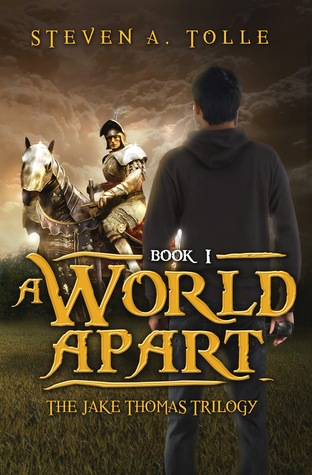
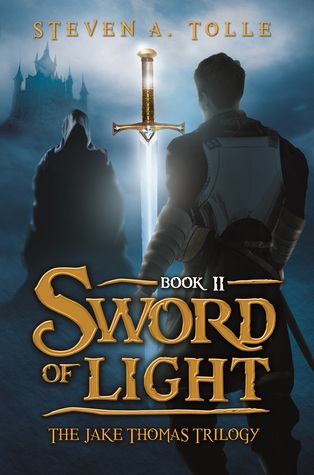
A World Apart & Sword of Light (Jake Thomas Trilogy 1-2) by Steven A. Tolle


Synopsis: A World Apart is the exciting first book in the Jake Thomas Trilogy.

Jake Thomas thought he was having a bad day. An after-school encounter with a long-time rival had left him angry and dismayed, but little did he know that before the day was done, his life would be changed forever.

Suddenly and mysteriously transported to another world, he finds himself alone and without a clue how or why he was brought here. Cut off from his familiar surroundings, he has to find a way to survive and return home.

Soon after he begins to explore this new world, he meets an enigmatic warrior and is introduced to magic-wielding clerics. However, Jake finds out quickly that danger lurks all around him as demons exist on this world - and they want him badly!


Review:
The descriptions used to describe the world are of a good length. There is always plenty of information to allow a reader to really see the details of what the characters are seeing and doing, but they are not so lengthy that the pacing of the story suffers.

The author also does a good job of recapping events, for example if a character is asked to describe something that happened to them earlier in the story. In these cases, we as the reader do not need much detail and the author just gives a few lines of reminders.

The only part of the descriptions I found lacking was when the main character is being taught something, we are often told that the other characters tell him how to hold a sword, maintain a furnace or use magic but these details are never given to the reader and it left me feeling I was missing out.

The story, world and characters aren’t original, most of it has been seen before in some form. The basic story is that the main character is from our world, he is at school where he has some troubles, although he’s not quite the outsider seen in most books like this. He is magically transported to a fantasy world; the world itself is your typical European medieval fantasy setting, complete with knights, kings, a beautiful princess and an evil being bent on destroying everything.

Once there the main character turns out to be the chosen one, foretold of by a mysterious prophecy. He then begins his training by a tough warrior, who really has our hero’s best interests at heart, has a softer side underneath that gruff exterior and has the compulsory tragic past. After some training the hero is called upon to defeat a dangerous foe.

The characters are pretty standard as well. There was nothing really dislikeable with any of them, it was just everyone is someone I have seen before, many times in a fantasy novel.

One problem was that just about every good character was too nice, they would always say kind things, insist on being the one that pays for the bill, always offer and try to help everyone, be prepared to sacrifice themselves to save someone else, hug and have tears in their eyes when thanking someone. While it maybe okay to have one ‘perfect’ character in a story, when everyone is like that it just makes it dull. It also makes what they do less special since everyone is prepared to do the same thing.

There are one or two characters that break the perfect mold, although these tend to be very minor characters and their rarity doesn’t alleviate the problem with the rest of the cast.

We are given a glimpse of some of the evil characters, and in a similar problem to the good characters they seem to be wholly evil with nothing good to say about them. This gives them less depth.

There is nothing special about the magic system either. It is just flashy lights to blast enemies or heal friends.

There is a heavy Christian theme throughout the book, while the religion in the world our character enters isn’t actually Christian there are many very strong parallels and it is really Christian in all but name. In fact it is so close it is just another example of the books unoriginality.

For the most part the pacing is good, with a nice balance between action and scenes with more depth to them. There was a bit of a slowdown mid-book when the main character was in training without a great deal of action or major plot development but it didn’t last too long.

I read the Nook version of this book and there was some issue with the presentation that caused the text to be center aligned. The lines were also often broken mid-sentence half way across the page and only continued on the next line. This was sometimes a distraction and would pull me out of the story, the worst part was that it would often make dialogue confusing as it was often unclear who was speaking since you couldn’t tell if the new line of dialogue was on the same paragraph as the last one.

Another issue with the presentation, which may be in the printed book as well, was that the author didn’t use the standard use of punctuation for dialogue. I found this to be distracting and it would often pull me out of the story as I noticed these mistakes.

There was some swearing, violent scenes and references to sexual content, mostly implications or threats of rape (although no details are given), making this book unsuitable for younger readers. It is probably aimed at a young adult audience rather than middle-grade.

Overall I did enjoy the story, and if Goodreads allowed half stars I would have given it a 3 ½ rating. The descriptions were of an excellent quality and the story was enjoyable. The unoriginality of most of the elements is what hurt it the most.

I have read the second book in this series and feel that it was so strong I would recommend this series overall.

In full disclosure I won the second book in this series in a Goodreads giveaway.

 
Synopsis: Sword of Light, Book 2 of the Jake Thomas Trilogy, continues Jake's quest to return home.  Dominic and Jonas lead Hailyn, Marcus and Keria out of the demons’ stronghold, carrying Jake, who collapsed after his dramatic display of power. Jonas is stymied on how to heal Jake, but help arrives when Tomaris unexpectedly shows up in Sanduas.  Tomaris informs them that he believes that he has found a way to return Jake to his world – with the Guardian’s sword, an object of great power. When the demons first appeared a thousand years ago, the Guardian had confronted them, but was defeated and the sword lost. Standing in the way of any effort to recover the sword are two seemingly insurmountable obstacles – it is being defended by the demons and its exact location is unknown.  Following obscure clues, Jake, Dominic, and Hailyn go in search for the sword, trying to approach unnoticed by the demons. Jonas, Marcus and Keria remain in Sanduas and are confronted by a growing darkness that threatens the city itself. Lurking in the shadows, the mysterious figure from Creatos’ lair moves to protect the sword and find Jake


 Review:
The descriptions are very good, there are plenty of details allowing the reader to fully imagine the world and follow the story. The details do not go on for too long, and when short descriptions or summaries of conversations will suffice the author uses them and the pacing of the story never suffers due to too long descriptions.

I felt the characters were stronger in this book. They were more fleshed out and had more interesting personalities. Just like the first book in the series, the good characters did suffer from being too nice. They all almost always say nice things to one another, always are prepared to help someone, risk their lives and sacrifice them for anyone even if they have only just met them. By having everyone act like this makes the characters less diverse and interesting. It also makes anyone who does these things less special since you know that everyone acts in the same way.

Likewise all of the evil characters are completely evil, they all enjoy killing, forcing themselves on women, desire power and have little loyalty to those around them. This makes them less interesting and none of the evil people stand out since they all act in the same way. It was also annoying that (Spoiler ahead, highlight to read)all evil characters had been corrupted by demons. It would be more realistic if some people were just evil by themselves. End of Spoiler.

Characters also had a tendency to ‘just know’ something and their instincts would always be right. This was hard to believe and wasn’t always the best way for characters to solve a problem or know what to do next.

The first half of the book had plenty of story, plot and character development, but there was virtually no action. There were some tense scenes which could have led to action but these never turned out that way. It would have been nice to have seen Dominic’s part of the story at this point as this would have provided some much needed excitement.

The last part of the book was perhaps a little heavy in action. There are still some character and plot scenes but the vast majority of them were action based. Some of them were too similar to each other and I found myself suffering from ‘battle fatigue’ and wanting something a little more diverse and thought provoking.

The religious element is again strong, it is not overpowering but it is usually present.

There was more originality in this book compared to the first one. It is by no means an original story but it didn’t suffer as badly as the first one. We also get to see more of the world and cultures adding more interesting things and originality to the book.

The romance part is nice, it is not a large part of the story allowing a reader to enjoy the book if they are not interested in this sort of thing, but it is believable, people feelings are realistic and it is developed well.

All three main storylines were well written and interesting, and I found myself simultaneously wanting to read the current POV and to switch to one of the others as they were all so good.

Just like the first book the dialogue was incorrectly punctuated, most of the time this was just annoying and distracting, and would pull me out of the story, but sometimes it made it hard to follow who was speaking.

There was some swearing, violent scenes and references to sexual content, mostly implications or threats of rape (although no details are given), making this book unsuitable for younger readers. It is probably aimed at a young adult audience rather than middle-grade.

In full disclosure I won this book in a Goodreads giveaway.


Sunday, October 27, 2013

Stray Souls (Magicals Anonymous #1) by Kate Griffin

Stray Souls (Magicals Anonymous #1) by Kate Griffin

Synopsis: 'Don’t look back. It wants you to look back.’

London’s soul has gone missing. Lost? Kidnapped? Murdered? Nobody knows – but when Sharon Li unexpectedly discovers she’s a shaman, she is immediately called upon to use her newfound powers of oneness with the City to rescue it from a slow but inevitable demise.

The problem is, while everyone expects Sharon to have all the answers – from the Midnight Mayor to Sharon’s magically-challenged self-help group – she doesn’t have a clue where to start.

But with London’s soul missing and the Gate open, there are creatures loose that won’t wait for her to catch up before they go hunting.

Stray Souls is the first novel in the Magicals Anonymous series, set in the same fantastical London as the Matthew Swift novels.


Review: In full disclosure I won this book in a Goodreads giveaway.

It should be pointed out there is a lot of swearing in this book, it is not suitable for younger readers or anyone who is offended by such things.

I must admit, it took me a while to get used to the unusual writing style of this novel and early on I found myself wondering how hard it was going to be to finish this one. I shouldn’t have worried as once I had become used to the writing I really enjoyed this book.

The first unusual thing about the writing was that even though it is written in third person, the way it is written it almost feels like it has been written in first person and the author just changed all the instances of I to he/she. It made it sound like a crazy diva who talks about themselves in third person.

The thought patterns of the characters and how the pauses in action were broken up were written in a very strange way. The thoughts would often stop halfway through if the person became distracted, and if something interrupted some action the sentence would end without any punctuation and carry on in the next paragraph. At first I was very distracted by this, and found myself thinking about the writing style and was taken out of the story. Once I became more familiar with it, I actually found it to work well.

The chapters tended to be very short (about four pages long on average). The point of view often changed with the chapters and this did sometimes lead to a very stop-start style in the story. Quite often there would be a chapter following the main character, then a short chapter where one of the other characters tells you about themselves and then the story returns to the main character and follows her around again. Early on I thought this really slowed down the pacing of the story and I found myself wishing it would just get back to continuing the story. But later on it worked really well as it gave great insights into the many characters, and usually at a time that is appropriate to reveal something about that person.

The characters are fantastic and reminded me a lot of something written by Terry Pratchett. There are some great ideas that are well executed, there’s a germaphobic vampire, a druid with allergies, a werepigeons (yes pigeons, plural), a troll who doesn’t like violence and a shaman who doesn’t know how to be a shaman to name a few. They were very real, humorous in their odd ways, awkward and would act like people in real life. E.g. rather than being heroic and wanting to go on a quest they would be reluctant and only do it because they had to.

They writing style and language is very British, I am originally from England so didn’t have a problem but if you are not familiar with some of the British terms you may have troubles understanding what the characters are saying at times.

<spoiler>The ending reminded me of Bladerunner, in that the main evil character who we have been hating the whole time gives one small speech and I found myself feeling pity and compassion for them. </spoiler>

Overall I would say it took a while to get used to the usual writing style but once I did it turned out to be an excellent story with fantastic characters and well worth reading.

Rating: *****


Sunday, October 20, 2013

Romulus Buckle & the City of the Founders (Chronicles of the Pneumatic Zeppelin #1) by Richard Ellis Preston Jr.

Romulus Buckle & the City of the Founders (Chronicles of the Pneumatic Zeppelin #1) by Richard Ellis Preston Jr.

Synopsis: In a postapocalyptic world of endless snow, Captain Romulus Buckle and the stalwart crew of the Pneumatic Zeppelin must embark on a perilous mission to rescue their kidnapped leader, Balthazar Crankshaft, from the impenetrable City of the Founders. Steaming over a territory once known as Southern California — before it was devastated in the alien war — Buckle navigates his massive airship through skies infested with enemy war zeppelins and ravenous alien beasties in this swashbuckling and high-octane steampunk adventure. Life is desperate in the Snow World, and death is quick. Buckle and his ship’s company must brave poisoned wastelands of Noxious Mustard and do battle with forgewalkers, steampipers, and armored locomotives as they plunge from the skies into the underground prison warrens of the fortress city.
Captain Romulus Buckle must lead the Pneumatic Zeppelin and its crew of ne’er-do-wells on a desperate mission where he must risk everything to save Balthazar and attempt to prevent a catastrophic war that could wipe out all that is left of civilization and the entire human race.


Review: This is one of those books that take a while to get going. I can see why some reviewers say they gave up with it after the first 100 pages. But this book is worth sticking with as once you get passed the initial part there is an excellent story and characters.

The descriptions are of a high level. Most of the time this is really good as it gives you clear view of the world and what is happening in it. There were some times I felt that the description went on for too long and it hurt the pacing of the story. I didn’t really need a detailed description of every single part of the ship, its crew, where they sit etc.

The lengthy descriptions are not limited to the sights, sounds and smells of the world, but also in the narrative of the characters. Just about every part of every conversation is included. The parts that slowed down the story the most was the bridge actions. First the commanding officer will give a command (usually a ship maneuver), a crew member will then repeat the command back to the commander, then we get a description of what the crew has to do (turning valves, flicking switches etc.) the maneuver or action being carried out and finally the result of what they did. There would often be several of these commands, confirmation, carryout and maneuvers in one go, making for a couple of pages of uninteresting story which really slowed the pacing down. Although for the most part this became annoying, one nice thing about this style was during times when the crew needed to do something quickly (such as hurry to a destination for a rescue) it really increased the tension as I waited for the slow paced ship/story to get to where they needed to be and I was worried they wouldn’t make it in time.

Initially I thought there was too much world building, and this is true for the first 100 pages or so. It appears in large chucks making it hard to absorb and slowing down the pace of the story. Luckily like so much about this book once you get pass the slow part there is a much better balance.

Similarly the characters suffered at the start of the story, with all the world building going on and some part spent on action, very little background is given to the characters and we don’t really learn very much about them. But just like the story, once you get pass the first part of the book there is plenty in there. We find out a lot about the main characters past, what their thoughts and motives are, and how they develop throughout the story.

As I have already said, the pacing picks up after the first 100 pages or so, and there is a much better balance between, story, world building and characters. The length of the descriptions feels about right and we are not continually interrupted by large chucks of world building.

If you are reading this book and get to page 100 and are thinking about given up then I would urge you to stick with it, at least for another 100 pages as the book really improves after the initial slowness.

Rating: ****

Sunday, October 13, 2013

The Time Fetch by Amy Herrick

 The Time Fetch by Amy Herrick


Synopsis (from book) "Edward picks up what he thinks is a rock. He doesn’t know it is a sleeping Time Fetch—and touching it will release its foragers too soon and alter the entire fabric of time and space. Soon the bell rings to end class just as it has begun. Buses race down streets, too far behind schedule to stop for passengers. Buildings and sidewalks begin to disappear as the whole fabric of the universe starts to unravel. To try to stop the foragers, Edward must depend on the help of his classmates Feenix, Danton, and Brigit—whether he likes it or not. They all have touched the Fetch, and it has drawn them together in a strange and thrilling adventure. The boundaries between worlds and dimensions are blurred, and places and creatures on the other side are much like the ones they’ve always known—but slightly twisted, a little darker, and much more dangerous.

A fast-paced tale filled with mythology, danger, friendship, and a shocking centuries-old secret, The Time Fetch is sure to delight fans of fantasy adventure with its tale of ordinary kids who tumble into a magical situation.

For ages 10 and up, grades 5 and up.
"


Review: The story itself was fairly good with some really interesting concepts that were well written. The big problem I had with this book was the characters.

They were all one-dimensional, lacking any depth or interesting characteristics. They were also almost all unlikeable.

Firstly there was Edward, he is lazy, uncaring, sometimes mean and a loner. He had no qualities to draw me to him and plenty to push me away.


Then there was his friend Danton. He wasn’t too bad; he was a nice guy and encouraging to the others to get stuff done and tried to get them to get along. He was a contrast to Edward and although he wasn’t unlikeable he lacked the exciting personality to make me drawn to him.

Next there was Brigit, who is a selective mute. She was probably the most interesting character and the most sympathetic. I did like her, but I would like to have seen her fleshed out a little more. We are told early on that she is mute because of the death of her infant brother, but other than being told that fact once it never really comes up again or is prominent in her thoughts.

Finally there was Feenix, a girl at Edward’s school who he didn’t get along with. She was mean and a bully. At first I really didn’t like her. Then she was captured by the witches and has a hard time. During this period I did feel a little sorry for her because it was so unpleasant. Then she escapes (with a little help from the other children). My problem then was she was still pretty much the same mean bully she was before (although she is a little nicer.)

All of this made it hard to empathize with the characters or get excited about what they were doing. It also made the situation less tense because I didn’t care what happened to them. And it really hurt the story.

There was very little character development in the book. For the most part they stay the same throughout the story. When they do change it’s normally sudden and doesn’t feel genuine.

Another problem I had was with the lessons the characters have. They go to a class where the teacher gives them some crazy lesson about some obscure fact. The things that they are taught then become relevant to the story a short time late. It felt unnatural and every time it happened it felt like there was a flashing red light and an announcer saying “Pay attention this will be coming up in the story shortly”

There were several plot points that are never really explained, they just happen without giving any satisfactory reason why.

The language the characters sometimes pulled me out of the story, it didn’t seem natural. For example the characters would sometimes literally use the word ‘bleeping’ in place of swearing or other language than you might hear on a children’s TV show but doesn’t seem real enough for a book.

I really wanted to like this book, the concept was fantastic and the plot was good. It was just the awful, one-dimensional, unrealistic, unlikeable characters that made it a chore to get through.

In full disclosure I won this book in a Goodreads giveaway.

Rating ** 

Sunday, October 6, 2013

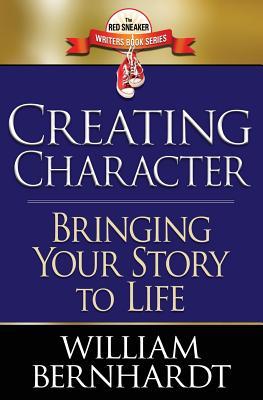
Creating Character: Bringing Your Story to Life by William Bernhardt

 Creating Character: Bringing Your Story to Life by William Bernhardt

"All fiction is character-driven, according to William Bernhardt, despite what you might have heard elsewhere. If your characters don't interest readers, even the most exciting plots will fail. "Action is character," Aristotle wrote, but what does that mean, and how can you use that fundamental principle to create dynamic fiction that will captivate readers? This book explains the relationship between character and plot, and how the perfect melding of the two produces a mesmerizing story. Using examples spanning from The Odyssey to The Da Vinci Code, Bernhardt discusses the art of character creation in a direct and easily comprehended manner. The book also includes exercises designed to help writers apply these ideas to their own work."


In full disclosure I won this book in a Goodreads giveaway. I haven’t read any other writing books, but I had written about a 1/3 of a novel at the time of reading this book.

This book provides excellent tips for writing more interesting characters.

I must admit I was a little worried when I read the first chapter, it seemed a little wishy-washy without any real tips, fortunately the rest of the book was excellent with great tips and advice.

The tips are general enough to apply to whatever book you are writing but specific enough for you know how and where you will apply it to your own work.

There are plenty of examples in this book that calls upon well known characters both from books and TV (such Sherlock Holmes, Doctor House and James Bond.) The nice thing about these examples is that you can still understand them even if you don’t know the characters. He sometimes uses characters from his own books, although these were just because he knew them so well and could give excellent examples and it never felt that he was trying to promote his own books.

There were plenty of tips where it helped me realize how I could improve my book and writing, although rather nicely I also saw what I had done a lot right.

The writing style is very easy to read, even if you have never studied writing you will be able to understand everything that the author tells you. He very rarely uses technical terms and on the few occasions that he does, he fully explains what they mean.

One tip I have for this book, use a highlighter pen, there are so many useful tips you will need to highlight the ones that you find the most useful and relevant.

I liked the short length of this book, there was no filler, just great advice on how to write. The short length was nice as it meant I could read it without feeling I should get back to my own writing.

I would recommend this book to anyone who wishes to improve their writing, I will defiantly getting the rest of this series.

Rating *****